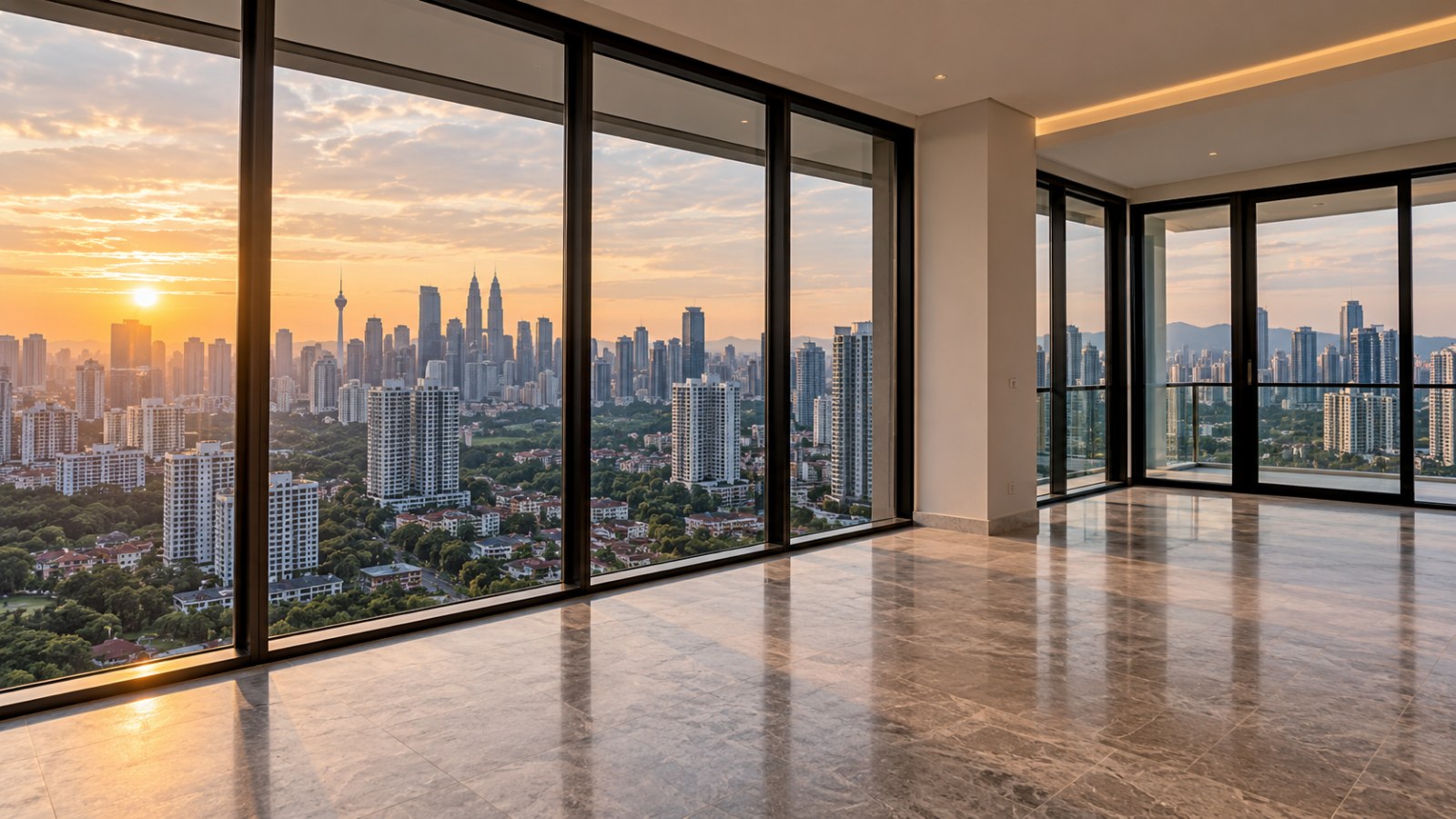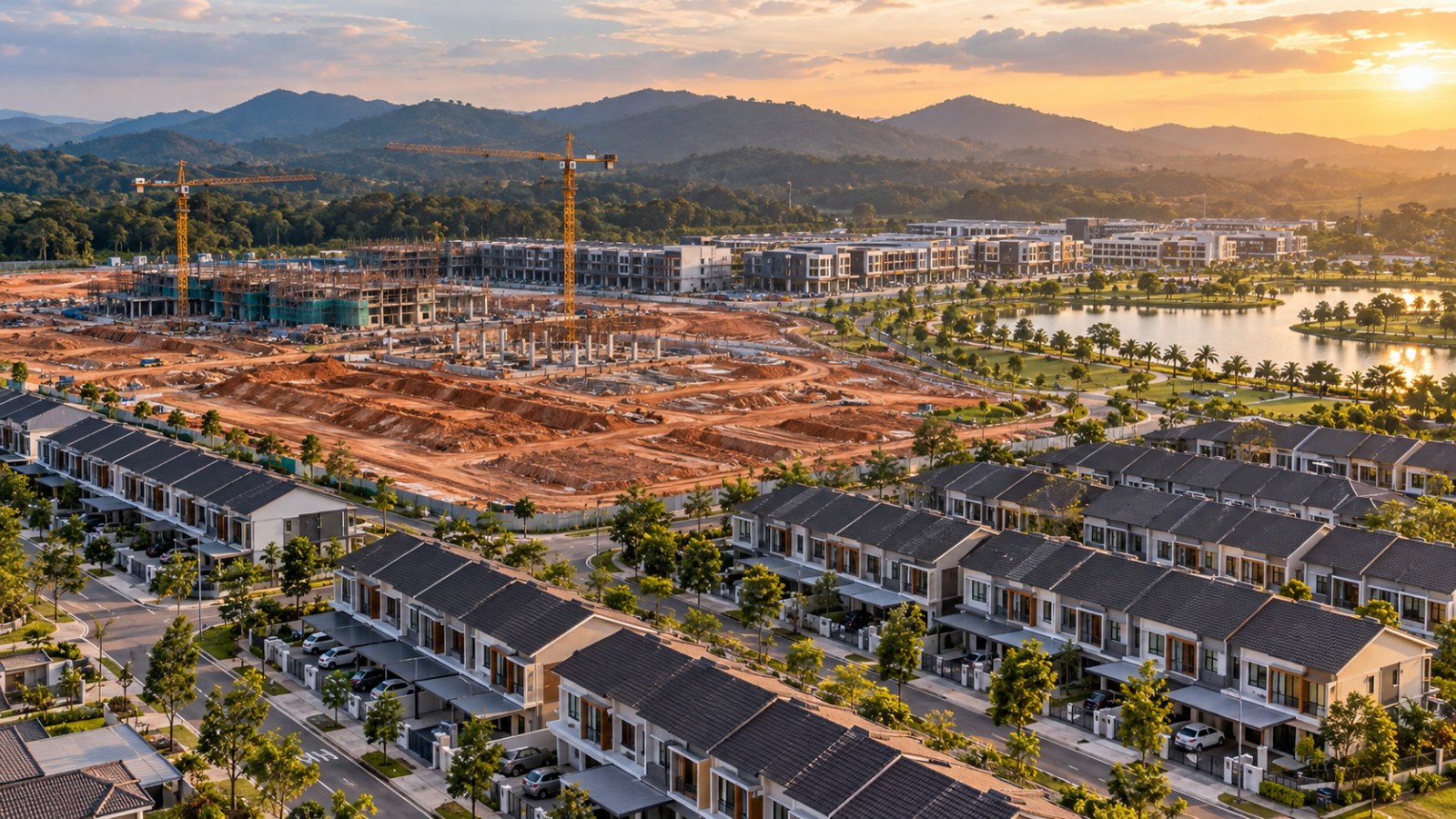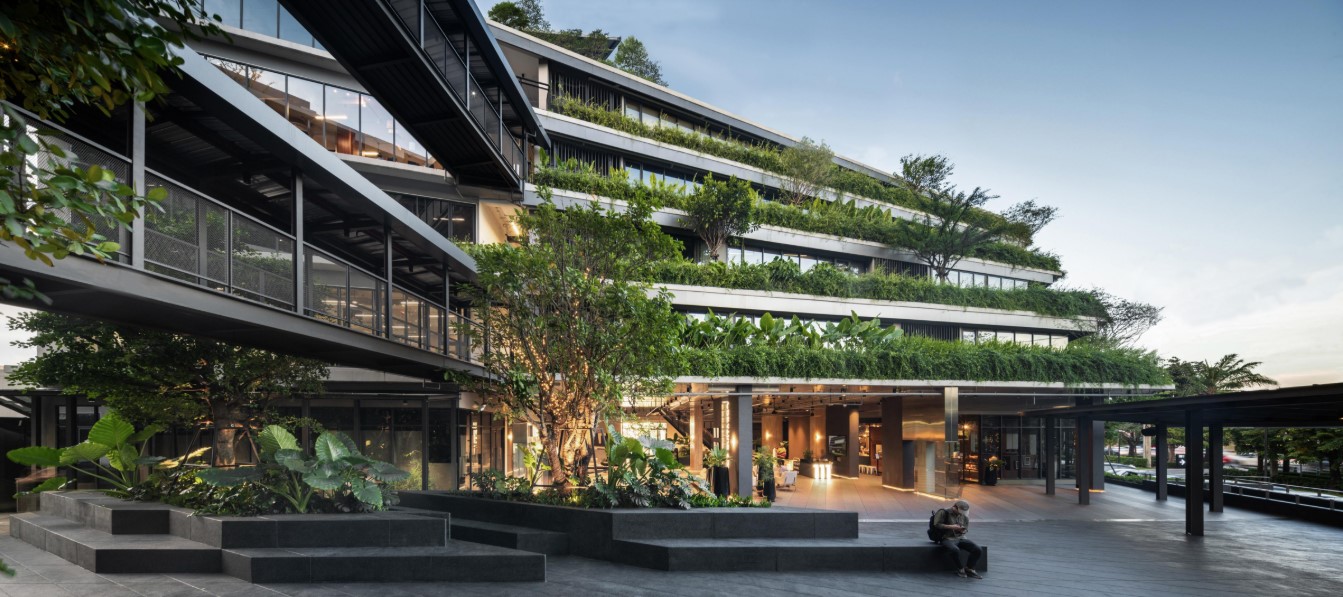
A landscaped façade, solar panels and a sustainability logo can make a development look environmentally responsible. But none of these elements, on its own, answers the most important question: how sustainably does the building actually perform?
This distinction is becoming increasingly relevant across Asian property markets. Developers, owners, occupiers and investors are paying greater attention to environmental performance, while green-building frameworks are becoming more sophisticated.
The wider stakes are significant. The United Nations Environment Programme reported in its 2025–2026 Global Status Report that buildings and construction account for around 37% of global carbon dioxide emissions and nearly half of global material extraction. :contentReference[oaicite:15]{index=15}
For property developers, credible sustainability therefore requires more than adding “green” to a development’s marketing materials. The strongest claims are specific, measurable and supported by evidence.
Green Building Is Not a Single Measurement
One reason sustainability communication becomes confusing is that the term “green building” can refer to many different characteristics.
A development may use less operational energy. Another may reduce embodied carbon through its materials. A third may provide better climate resilience, water efficiency or maintainability.
Singapore’s current BCA Green Mark 2021 framework illustrates this broader approach. In addition to energy efficiency, the scheme addresses areas including whole-life carbon, climate resilience, maintainability, intelligent building systems and health and wellbeing. :contentReference[oaicite:16]{index=16}
That means developers should avoid reducing sustainability to one feature.
A building with extensive greenery is not necessarily energy efficient. A building with solar panels is not automatically low carbon. And a certified building should not be assumed to perform identically to every other building carrying the same certification.
The Sustainability Evidence Ladder
A useful way to evaluate property sustainability claims is to place them on an evidence ladder.
| Level | Evidence | What It Can Support |
|---|---|---|
| 1 | Marketing statement | A stated sustainability ambition |
| 2 | Design specification | Features planned or installed |
| 3 | Independent certification | Compliance with defined assessment criteria |
| 4 | Verified operating data | How the completed building performs in use |
| 5 | Documented exceptional achievement | A specific, measurable milestone that can potentially be independently recognised |
The levels are not substitutes for one another.
A design specification may show what a development intends to achieve. Certification can provide independent assessment against defined standards. Operational data then shows what happens after occupants move in and the building begins functioning under real conditions.
Certification Is Valuable — But Understand What It Certifies
Independent green-building certification can provide a much stronger basis for sustainability communication than an unsupported developer claim.
Singapore’s BCA Green Mark, for example, is a structured environmental-performance framework covering new and existing buildings. BCA also has a verification stage designed to confirm that committed green features and specifications have actually been implemented. :contentReference[oaicite:17]{index=17}
Malaysia likewise has several green-building assessment approaches. GreenRE’s Energy Certificate for existing non-residential buildings can evaluate energy performance using active-building systems or actual verified consumption data. :contentReference[oaicite:18]{index=18}
Certification therefore provides meaningful evidence, but developers should still describe the certification accurately.
If a project receives a particular environmental rating, the appropriate claim is that it achieved that certification under the relevant framework — not that certification automatically makes it the “most sustainable” project in the market.
Actual Energy Consumption Creates Stronger Evidence
For completed and occupied properties, operational energy data can provide an additional layer of evidence.
Singapore’s BCA uses Energy Use Intensity, commonly abbreviated as EUI, as a benchmarking measure. EUI divides a building’s annual electricity consumption by its gross floor area, making it possible to compare energy performance among similar categories of buildings. :contentReference[oaicite:19]{index=19}
This demonstrates an important principle for developers and owners: a sustainability claim becomes more meaningful when it can be connected to an objective unit of measurement.
Instead of saying:
“Our building is highly energy efficient.”
a property owner with appropriate verified data may be able to communicate:
“The building recorded an Energy Use Intensity of X kWh per square metre per year during the specified reporting period.”
The second statement provides a measurable figure, although meaningful interpretation should still consider building type, occupancy patterns and an appropriate benchmark.
Measure the Right Thing for the Claim
| Sustainability Claim | More Appropriate Supporting Evidence |
|---|---|
| Energy-efficient building | Verified EUI or other recognised energy-performance data |
| Green-certified development | Valid certification under the relevant assessment framework |
| Lower embodied carbon | Documented life-cycle or embodied-carbon assessment |
| Reduced operational energy | Comparable consumption data over defined periods |
| Climate-resilient design | Relevant resilience assessment and documented design measures |
| Major sustainability milestone | Clearly defined measurement supported by verifiable evidence |
The evidence should correspond to the exact statement being made.
A rooftop solar installation can prove that renewable-energy infrastructure exists. It does not, by itself, show what percentage of the building’s annual electricity demand is supplied by solar generation.
Likewise, installing efficient equipment does not automatically prove that overall energy consumption has fallen unless comparable operational data supports that conclusion.
Design Performance and Operating Performance Are Different
A building exists first as a design and later as an operating asset.
At the design stage, sustainability assessments may depend on modelling, specifications and intended systems. Once a building is occupied, actual performance can be influenced by operating hours, occupant behaviour, equipment settings, maintenance practices and the way different spaces are used.
This is why sustainability assessment increasingly needs to extend beyond the development launch.
The developer may deliver the physical infrastructure, but property managers, facilities teams, tenants and owners can influence performance throughout the building’s operating life.
Whole-Life Carbon Expands the Measurement Beyond Electricity
Energy consumption during building operations is only one component of environmental impact.
Modern sustainability frameworks are increasingly concerned with whole-life carbon, which also considers emissions associated with building materials and construction.
BCA Green Mark 2021 specifically includes whole-life carbon within its framework, reflecting the importance of considering material-related impacts alongside operational energy. :contentReference[oaicite:20]{index=20}
This matters because a developer could improve operational efficiency while still using carbon-intensive materials during construction.
Neither measurement should be ignored. They answer different questions.
Green Certification Is Increasingly Becoming an Expected Attribute
As more property portfolios obtain sustainability certifications, certification alone may become less effective as a differentiator.
CBRE’s 2025 Asia Pacific Real Estate Chief Sustainability Officer Survey found that 44% of responding asset owners already had at least 80% of their portfolios green certified, while 68% expected to reach that threshold by 2028. The survey also identified energy efficiency as a leading strategy for property owners pursuing decarbonisation. :contentReference[oaicite:21]{index=21}
This suggests that the next stage of sustainability competition may increasingly involve the quality of performance rather than simply whether a certificate exists.
Developers Should Build an Evidence File
Developers making significant sustainability claims should consider maintaining a structured evidence file.
- Applicable green-building certification documents
- Assessment criteria and certification period
- Building energy-consumption records
- Energy Use Intensity data where relevant
- Renewable-energy generation data
- Carbon assessments
- Material specifications
- Verification reports
- Water-performance information
- Commissioning documentation
- Relevant third-party assessments
- Defined methodology behind public sustainability figures
This documentation is valuable even when no external award or recognition is being pursued. It gives owners and management teams a stronger foundation for ESG reporting, tenant communication, asset management and future retrofits.
When Sustainability Performance Becomes an Exceptional Property Achievement
Some developers or property organisations may eventually achieve sustainability milestones that are exceptional because they are objectively measurable.
Examples could involve an unusually large-scale green-building programme, a measurable construction milestone, a portfolio-wide achievement or another clearly defined property benchmark.
Where the measurement is specific, significant and independently verifiable, it may potentially be relevant to forms of property achievement recognition Asia, including recognition through organisations such as Asia Record.
This should remain separate from normal green-building certification.
An Asia record certification, if applicable to a specific measurable property achievement, would document the recognised milestone. It should not be interpreted as proof that the development provides superior investment returns, better construction quality in every respect or higher future property appreciation.
Different forms of recognition answer different questions.
A Seven-Question Sustainability Claim Test
Before placing a sustainability statement in a property brochure, corporate report or media announcement, developers can ask:
- Specific: What exactly are we claiming?
- Measurable: Can the claim be expressed using an objective metric?
- Relevant: Does the metric actually support the statement?
- Comparable: Is there a meaningful benchmark or baseline?
- Current: Does the evidence relate to the current building or reporting period?
- Verifiable: Could an independent party examine the evidence?
- Qualified: Have we avoided extending the claim beyond what the evidence demonstrates?
If a claim performs poorly against several of these questions, the developer may need to strengthen the evidence or narrow the wording.
From Green Branding to Building Performance
Sustainability will remain an important part of property development across Asia, but the quality of the conversation needs to improve alongside the quality of buildings.
The most credible developers will increasingly be those that can explain not only which green features were installed, but also what those features were intended to achieve, which standards were applied and how the completed property performs.
Certification remains valuable. Good design remains important. Landscaping, renewable-energy systems and efficient equipment can all play meaningful roles.
But measurable performance gives those features context.
For property developers, the stronger long-term approach is therefore not to market sustainability more aggressively. It is to measure it more precisely.