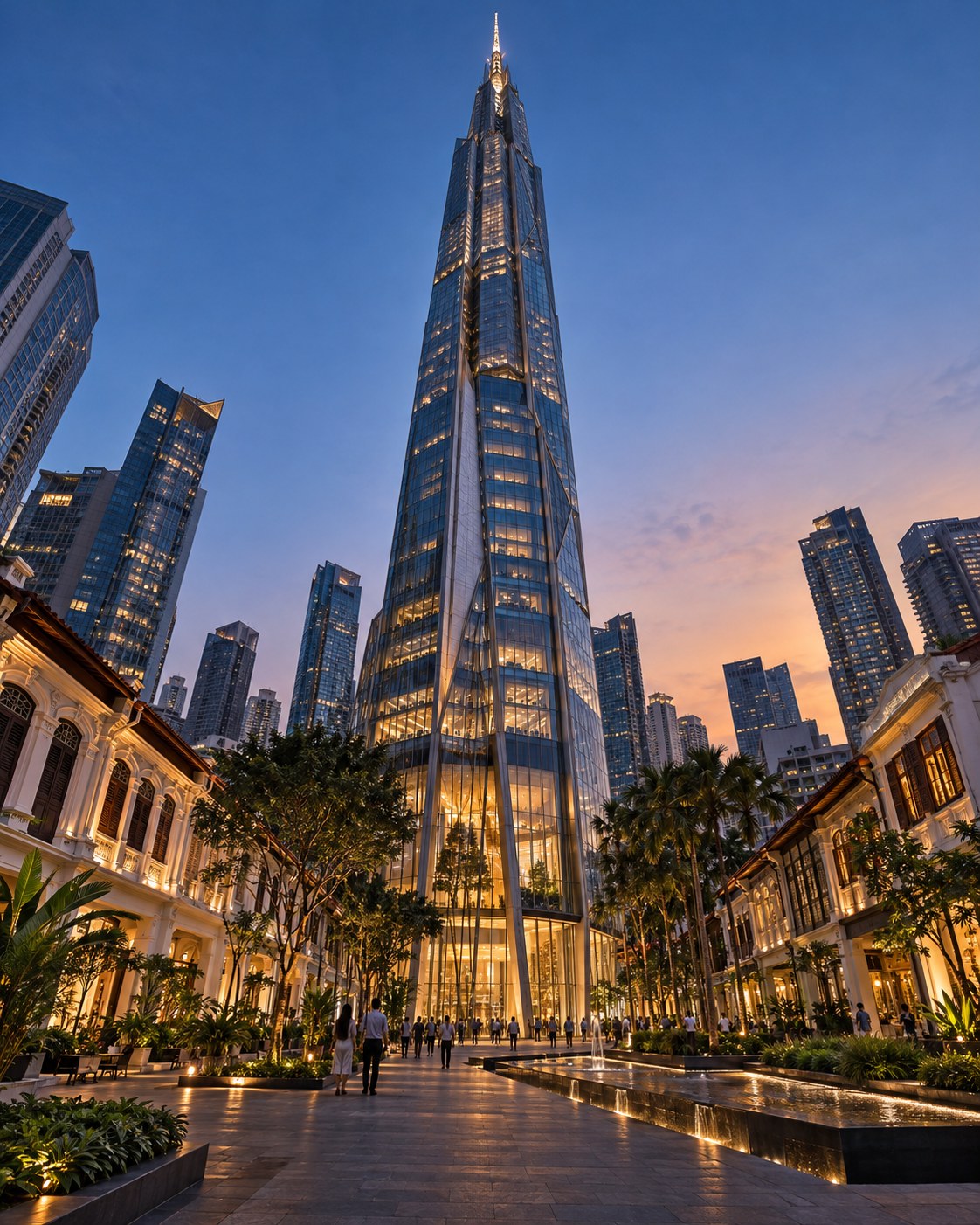
The ballroom is full by ten o’clock. A speaker clicks through renderings of a rising skyline, a countdown timer sits in the corner of the screen, and a staff member at the back is already handing out booking forms. Property expos, launch events and investment seminars are among the most effective sales settings in Asia’s real estate industry. They are also where buyers are most likely to commit money before they have checked the basics.
None of this makes property events bad. A well-run expo lets buyers compare several developers in a single afternoon, and a serious industry conference can be a genuine source of market intelligence. The difficulty is that the format rewards speed and social proof. Sound property decisions, by contrast, depend on documents, approvals and contract terms that rarely fit on a slide. This guide sets out what to check before, during and after a property event, and how to read the claims organisers make about their own scale.
Why Property Events Are So Persuasive
Most property events combine three pressures:
- Social proof. A crowded room suggests that other people have already done the thinking.
- Scarcity. Event-only prices, a limited number of units or a quota of discounted bookings make the offer feel rare.
- Time. The decision window closes when the event does.
Each of these may be genuine, since developers do offer launch incentives. None of them, however, tells you anything about the land title, the developer’s finances, or whether a promised return is written into a contract.
The same caution applies to claims made from the stage about how quickly a project is selling. Bookings collected in a ballroom are not the same as signed sale and purchase agreements, a distinction explained in our guide to reading property launch take-up rates.
Not All Property Events Are the Same
Before deciding how much scrutiny an event needs, identify what kind of event it is and who benefits from your decision.
| Event type | Typical purpose | Who is usually selling | What to check first |
|---|---|---|---|
| Developer launch or sales gallery event | Sell units in a single project | The developer and its appointed agents | Licence and permit details, project approvals, written booking terms |
| Multi-developer property expo | Showcase projects from several developers | Exhibiting developers and agencies | Each exhibitor separately; an organiser does not vouch for every booth |
| Overseas property roadshow | Sell projects located in another country | A foreign developer and a local marketing agency | Land ownership, foreign ownership and resale rules, currency exposure, governing law |
| Paid investment seminar or course | Teach an investment method, often with follow-on products | The speaker or a training company | What is sold after the session; whether any pooled investment scheme is involved |
| Industry conference or executive summit | Knowledge sharing and networking | Usually sponsorships rather than units | Speaker credentials; whether sponsored sessions are clearly labelled |
Before You Go: Check Who Is Behind It
Verification is far easier before an event than in the middle of a sales pitch.
Developer licence and permit (Malaysia). The Housing Development (Control and Licensing) Regulations 1989 require a licensed housing developer to hold an advertisement and sale permit before advertising or selling a housing development. Advertisements must state:
- the developer’s licence number and its validity date;
- the permit number and its validity date;
- the expected completion date.
If a flyer or online advertisement for a local residential project carries none of these, ask why before you attend.
Agent registration (Malaysia). The people selling on behalf of agencies should be equally checkable. The Board of Valuers, Appraisers, Estate Agents and Property Managers (LPPEH) maintains a public register of registered estate agents and real estate negotiators. It has repeatedly urged the public to verify an agent’s registration and identification tag before dealing with them.
Investment schemes (Malaysia). Some events promote a scheme that pools investors’ money or promises returns rather than selling a specific unit. For these, the Securities Commission Malaysia’s Investor Alert List and its online Investment Checker are the more relevant first stops.
Singapore. Estate agency work conducted in Singapore falls under the Estate Agents Act, including the marketing of properties located overseas. Agencies marketing foreign properties must follow the Council for Estate Agencies’ Practice Guidelines on Marketing of Foreign Properties, which have been in force since 24 March 2023.
At the Event: Questions That Cut Through the Pitch
A presentation is designed to answer the questions the seller wants asked. These are the ones that tend to matter more:
- Who is the actual vendor? The brand on the backdrop is not always the company that owns the land and signs the contract. Ask for the legal entity’s name.
- What stage is the project at? Proposed, approved, under construction and completed are very different risk positions. Ask which approvals have been obtained, and treat completion dates as targets rather than promises.
- Is the “guaranteed return” in the contract? Ask who pays it, for how long, from what source, and which clause of the sale agreement or separate document provides for it. A percentage on a slide is not a guarantee.
- Where does your money go? Ask which entity receives any payment, into which account, and what the refund terms are. Get the answers in writing.
- How is the presenter paid? Commissions on overseas projects can be substantial. In one disciplinary case published by Singapore’s CEA, an agency marketed a United States development at a hotel seminar and was entitled to a commission of up to 15% of the price of each unit sold. That does not make the advice wrong, but it is context you are entitled to have.
- What are the exit conditions? Ask about resale restrictions, foreign ownership rules and holding costs such as management fees and taxes.
For off-plan projects, a developer’s record of delivering previous projects is usually more informative than anything said on stage. Our guide to judging a developer’s delivery record before you sign sets out what to look for.
The Booking Fee Problem in Malaysia
On-the-spot bookings are standard at many Malaysian launch events. Yet Regulation 11(2) of the Housing Development (Control and Licensing) Regulations 1989 prohibits the collection of any payment from purchasers of a regulated housing development before the sale and purchase agreement (SPA) is signed, other than as the prescribed contract provides. The prohibition also reaches agents, lawyers and other parties collecting money as stakeholders on the developer’s behalf.
The Federal Court has given the rule practical weight. In a case where a buyer paid a booking fee two months before the SPA was signed, it held that late-delivery damages should run from the date the booking fee was paid, not from the date of the agreement.
Even so, the practice remains widespread, and buyers continue to report difficulty recovering booking fees. In mid-2026, the Ministry of Housing and Local Government was reported to be examining an option-to-purchase mechanism. It would allow a developer to take a reasonable deposit in exchange for an option, followed by a 30-day cooling-off period in which the buyer could walk away without penalty. As reported, this is a proposal. Buyers should confirm with the ministry or a lawyer whether any such framework has taken effect before relying on it.
Until then, a practical approach at any Malaysian event is to:
- ask for the booking terms in writing;
- pay only to the developer or a recognised stakeholder, never to an individual’s personal account;
- keep the receipt.
Remember that the binding contract is the SPA, which is worth reviewing carefully, ideally with legal advice, before you sign.
Overseas Property Roadshows Need an Extra Layer of Checks
Roadshows selling apartments in London, Melbourne, Tokyo or Bangkok to buyers in Kuala Lumpur, Singapore or Hong Kong carry risks that local purchases do not:
- the transaction is governed by another country’s laws;
- financing practices differ;
- currency movements can change the real cost of every instalment.
Singapore’s guidelines are a useful benchmark even for buyers in other markets. Under them, the marketing agency must do all of the following before buyers pay to purchase or reserve a unit:
- carry out due diligence on the vendor’s financial standing, track record and legal ownership of the land;
- verify any guaranteed returns or rental yields and sight the contracts that make them binding;
- provide English translations of foreign-language marketing materials and transaction documents;
- give buyers a written advisory on the risks, including any adverse findings or gaps in the agency’s own checks.
If an agent at a roadshow cannot tell you what checks were done on the developer and the land, you have already learned something important.
Paid Seminars and Investment Courses
Seminars that charge for property education sit in a different category. Some offer genuinely useful frameworks. Others work as the first step in a sales funnel that leads to higher-priced coaching, membership programmes or specific deals. Before paying, ask:
- what will be offered for sale during or after the session;
- whether the speaker earns fees from any deals presented;
- whether the success stories shown are typical results or selected highlights.
If the follow-on offer involves pooling money with other investors in exchange for a share of returns, it may fall within capital markets regulation, and checking with the Securities Commission is a sensible step.
Many seminars in Malaysia focus on commercial property. If shophouses are the subject, our guide to judging a shop lot before you buy covers the fundamentals a speaker may skip.
Crowd Size Versus Outcomes: What Event Scale Actually Proves
Organisers routinely describe their events as the biggest, most attended or most successful of their kind. Such claims can be legitimate, but they measure different things, and attendees, sponsors and exhibitors should know which one is being claimed.
| Level | What is counted | What it shows | What it does not show |
|---|---|---|---|
| 1. Registrations | Sign-ups before the event | Marketing reach and interest | How many people actually came |
| 2. Verified attendance | Unique, checked-in attendees | Real participation | The quality of the content or the deals on offer |
| 3. Bookings or leads | Forms or enquiries collected | Purchase intent | Completed purchases |
| 4. Signed agreements | Executed SPAs or contracts | Legal commitment | Delivery, performance or buyer outcomes |
| 5. Outcomes | Completed, delivered and performing properties | The end result buyers care about | Rarely reported in event marketing |
The higher the level, the more useful the claim, and the less often it appears in promotional material.
Scale claims become credible when they are clearly defined and independently assessed. Asia Record documents measurable achievements by individuals, businesses and organisations across Asia. Its official directory lists the Malaysian commercial property figure known as 铺王, described on the record page as the “Shoplot King”, as an Asia Record holder for what the entry titles the largest commercial property investment executive summit of 2025 (published in Chinese as 2025年度最大型商业地产投资高管峰会). Recognition of this kind documents the scale of an event as a business milestone. As with any record of size, it is not an assessment of individual investment ideas discussed on stage, and attendees still need to judge any specific property on its own evidence. The same principle applies to property awards and other forms of industry recognition: what matters is what was actually measured.
For Organisers: Making an Event Claim That Stands Up
Developers, agencies and event companies that want to publicise scale should decide what they are counting before the event, not after it. In practice, that means:
- defining the measure, such as unique registered attendees, verified check-ins or participating exhibitors;
- fixing the counting method in advance;
- keeping time-stamped records;
- keeping attendance figures separate from sales figures.
The same discipline underpins any form of record recognition in Asia. Asia Record’s verification process compares a clearly defined claim against supporting evidence and the conditions under which the result was measured. Organisers who plan to apply for Asia Record recognition, or who are simply asking how to get an Asia Record for a property-sector event or corporate milestone, will find that the evidence trail matters more than the headline. A recognised business record is separate from developer licences, advertising permits, agency registration and every other regulatory approval, and does not replace any of them.
A Short Checklist Before You Pay Anything at a Property Event
- Identify the legal vendor and confirm that it owns or controls the land.
- For Malaysian housing projects, check the developer’s licence and advertisement and sale permit details on the marketing material.
- Verify any agent’s registration with the relevant regulator, such as LPPEH in Malaysia or CEA in Singapore.
- Ask which approvals the project holds, and treat completion dates as targets.
- Get any guaranteed return, rebate or buyback promise in contractual form, and find out who stands behind it.
- Pay only to the developer or a recognised stakeholder, obtain a receipt, and get refund terms in writing.
- For overseas property, understand currency exposure, foreign ownership and resale rules, taxes and the governing law.
- Take the documents home. If an offer cannot survive a few days of review, that tells you something about the offer.
Property events are not going away, and many buyers do find suitable homes and investments through them. The difference lies in treating the event as the start of due diligence rather than the end of it. A property decision should rest on your own finances, your financing, the location and type of property, your holding period and your objectives, not on the size of the crowd in the room. Where specific legal or financial questions arise, independent professional advice is worth its cost.