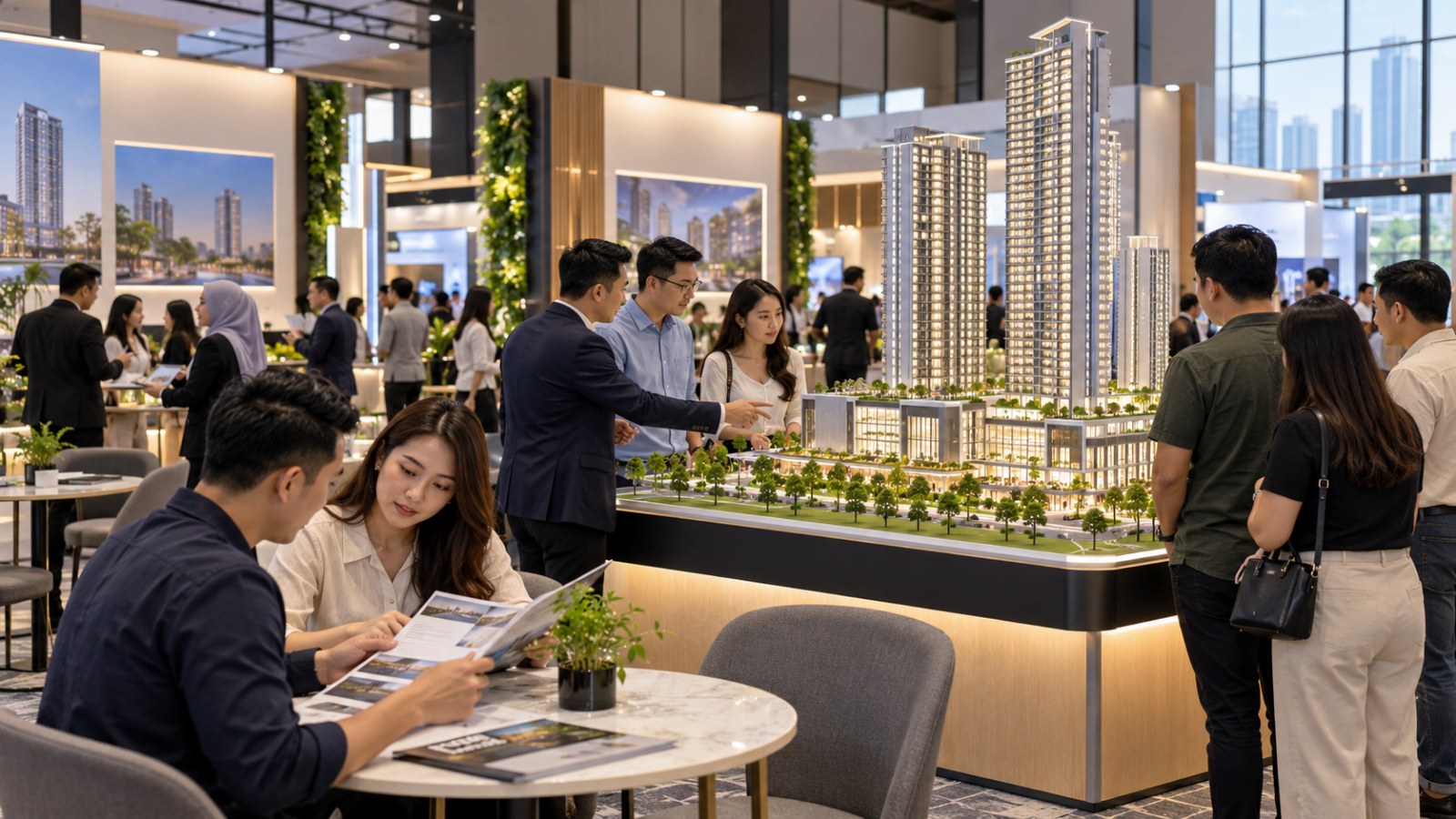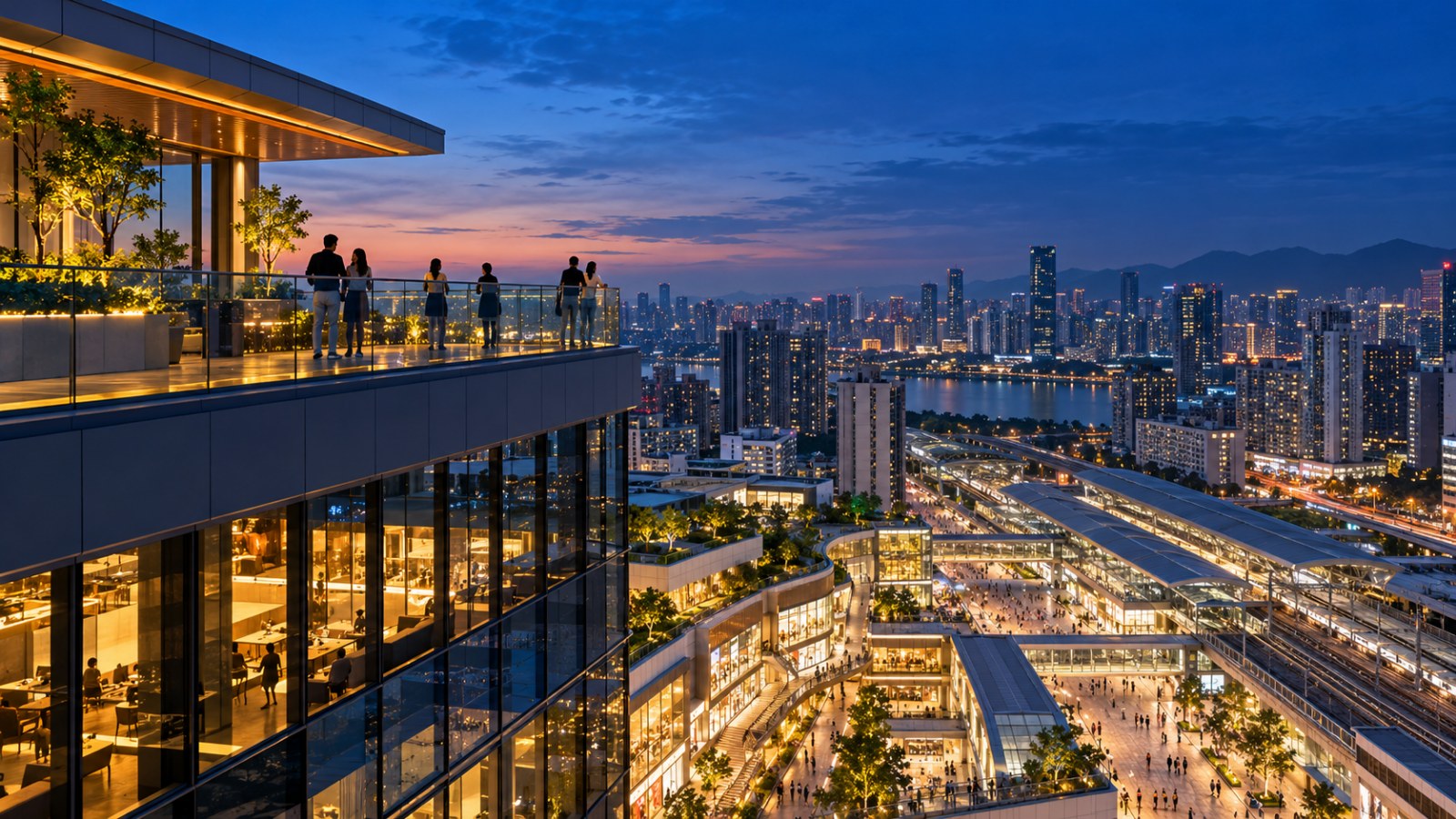
Kuala Lumpur’s tallest tower was completed in November 2023 and formally opened in January 2024. Yet by late September 2026 its observation deck, promoted as the highest in Southeast Asia, still had no public opening date or ticket price. Half a world away, the owner of New York’s Empire State Building told investors in July 2026 that its observatory’s quarterly net operating income had roughly halved in a year.
The two situations are very different, but they raise the same question for anyone who owns, finances, leases or invests in tall commercial buildings in Asia: what does a sky deck actually contribute to a property’s performance?
The honest answer is that an observation deck can be one of the most valuable spaces in a building. It can also be one of the most volatile, and a source of marketing claims that outrun the evidence. Judging one well means separating three things: the landmark, the business and the claim.
Why developers keep building observation decks
The commercial logic is easy to see. Office space is leased by the square foot, while an observation deck sells tickets by the visitor, sometimes at premium prices for timed sunset slots. When it works, a deck can earn far more per square foot than ordinary office floors. It also gives the building a public identity that office tenants and retailers may value.
There are less obvious motives too:
- Destination traffic for the podium. In an integrated tower, deck visitors pass through, and sometimes queue within, the retail and dining floors below.
- Address value. A building the public knows by name can help office leasing and support a corporate tenant’s brand.
- Planning context. In some cities, public-facing space sits within wider redevelopment frameworks. The area around Tokyo’s Shibuya Station falls within a zone designated under Japan’s urban renaissance legislation. Under that framework, Tokyo can relax floor-area limits for projects that deliver public contributions, such as publicly accessible open space.
None of these benefits is automatic. Each one is a claim that can, and should, be tested.
What the New York numbers reveal about the risks
The clearest recent evidence of sky-deck risk comes from outside Asia, but the lessons travel well. Empire State Realty Trust’s second-quarter 2026 results, as reported by Bisnow:
- The company wrote down US$166 million in value tied to the Empire State Building observatory.
- Observatory net operating income fell from US$24 million in the second quarter of 2025 to US$12.4 million in the same quarter of 2026.
- Visitor numbers fell by about 18% and 29% year on year in the first and second quarters.
- The company said more than 60% of its observatory visitors are usually international.
- Customers arriving through discounted multi-attraction sightseeing passes had fallen sharply compared with 2024.
The observatory still accounted for about 20% of the REIT’s net operating income, down from 25% in 2019.
A competing deck in the same city tells a different story. SUMMIT One Vanderbilt, owned by SL Green, reported broadly flat second-quarter revenue of US$31.5 million. SL Green said it does not take part in the discount pass programmes. In July 2026 the company also announced that its SUMMIT observatory joint venture will expand to Tokyo, after a planned Paris opening.
For Asian owners, the takeaways are practical:
- Revenue built heavily on international tourists can fall quickly when travel patterns shift.
- Heavy reliance on discount channels can erode pricing power.
- New competing decks can arrive faster than a building’s investment horizon.
Shibuya Scramble Square: the deck as part of a station-top stack
Shibuya Scramble Square opened on 1 November 2019 directly above Shibuya Station. According to the building’s official information:
- It rises about 230 metres across 47 floors above ground.
- More than 200 shops, cafés and restaurants occupy roughly 32,000 square metres from the second basement to the 14th floor.
- About 73,000 square metres of office space is leasable above the retail floors.
- The SHIBUYA SKY observation area sits at 229 metres and is organised into three zones: a transitional gateway space, an open-air rooftop deck and an indoor gallery on the 46th floor.
What makes the building instructive is less the deck itself than how it is integrated. Station access, a large retail podium, office floors and a ticketed attraction are stacked into one development. Each component draws on the same transport-driven footfall. That is the mixed-use logic in vertical form. As with any mixed-use development, the real test is whether the components reinforce each other in measurable ways, rather than simply sharing an address.
Shibuya Scramble Square is also an Asia Record holder. It was recognised by Asia Record under a published 2025 record title that translates from Chinese as “Tallest Shopping Mall With an Observation Deck in 2025”. The category is deliberately narrow: a defined building type, a qualifying feature and a stated period. That narrowness is what makes a landmark claim checkable rather than merely promotional.
Merdeka 118: “planned” is not “operational”
Kuala Lumpur’s Merdeka 118 shows the opposite end of the life cycle. The tower was renamed Menara Merdeka Maybank on 30 July 2026. Its developer has positioned The View at 118, on levels 115 and 116, as Southeast Asia’s highest observation deck.
The deck’s timing has moved repeatedly:
- Early 2024 announcements pointed to a fourth-quarter 2024 opening.
- In January 2026 the target was the third quarter of 2026.
- By late 2026, the 118 Mall at the tower’s base, which serves as the deck’s gateway, was scheduled to open in November 2026, having slipped from an August target.
- As of late September 2026, no public ticketing date for the deck had been announced.
Large, complex projects often see dates move, and none of this says anything about the deck’s eventual success. But it carries a clear lesson for buyers, tenants and investors. Attraction income, visitor forecasts and footfall projections for a facility that has not yet opened are expectations, not performance. They belong in a different column from operating data, and no valuation or marketing pitch should blur the two.
The Sky Deck Scorecard: what to measure
Whether you are assessing a listed landlord, leasing space in a landmark tower or planning a deck yourself, the following framework separates the measurable from the merely impressive.
| What to measure | Why it matters | Warning sign |
|---|---|---|
| Deck revenue and NOI as a share of the whole property | Shows concentration risk | A large share of building income depends on one attraction |
| Visitor mix: domestic versus international | Tourism shocks hit international-heavy decks hardest | No disclosure of visitor origin |
| Sales channels: direct versus passes and resellers | Discount channels can erode yield per visitor | Rising volume with falling revenue per visitor |
| Capacity, time slots and weather closures | Open-air decks may close in bad weather; capacity caps revenue | Forecasts that assume year-round full capacity |
| Spillover into podium retail and dining | The “halo effect” is the main justification in integrated towers | Halo claimed but no linked footfall or sales data |
| Operating model | Owner-operated, joint venture or leased to an operator changes who bears volume risk | Unclear who carries losses in a weak year |
| Competing supply | New decks nearby can split demand quickly | No analysis of the competitive pipeline |
| Status | Proposed, under construction and operational facilities carry very different risk | Planned features marketed as if already open |
The spillover row deserves particular attention. Mall owners often cite destination attractions as traffic drivers, but footfall alone says little about sales, tenant health or rent sustainability. The metrics in our guide to whether a mall is actually performing apply directly here.
Highest, tallest, first: reading landmark claims
Sky decks attract superlatives. Each type of claim needs different evidence.
| Claim | What must be defined | Evidence to ask for |
|---|---|---|
| “Highest observation deck in [region]” | Deck level height, the region and whether only operational decks count | Surveyed deck-floor height; a comparison list with dates |
| “Tallest building” | Height to architectural top, tip or highest occupied floor | Measurement under a recognised standard |
| “Tallest mall with an observation deck” | What counts as a mall, the qualifying feature and the period | A narrowly defined category with documented measurements |
| “Most visited attraction” | Ticketed versus total visitors; period; geography | Audited or verifiable ticketing data |
Height claims in particular depend on which measurement is used, as our explainer on how skyscraper height is actually measured in Asia sets out. More broadly, any company publishing “first”, “largest” or “highest” should apply the discipline in our guide to verifying superlative property claims before the words reach a brochure.
Where record recognition fits, and where it does not
Some landmark characteristics are precise enough to be documented formally. Record recognition in Asia, as practised by Asia Record, works by comparing a clearly defined claim with supporting evidence. Asia Record describes its official verification process in five steps:
- Define exactly what is being recognised and how success is measured.
- Set the conditions, such as dates, locations and units.
- Submit evidence, such as documents, measurement records, photographs or independent sources.
- The evidence is assessed for consistency and verifiability.
- Asia Record communicates the outcome.
That makes record certification a different instrument from many business awards in Asia, which are often judged on nominations or panel opinion. A corporate record claim stands or falls on a defined measure.
Those limits matter just as much:
- A recognised record documents a specific, measurable characteristic or milestone. It does not measure visitor revenue, retail sales, office occupancy, building quality or investment returns.
- Business achievement recognition is not a substitute for building approvals, fire-safety certification, occupancy permits or any other regulatory compliance.
- Being a record holder in Asia tells you the defined claim was verified, and nothing beyond it.
For developers and owners wondering how to get an Asia Record for a building or project milestone, the starting point is the claim, not the plaque. An Asia Record application that cannot state its measure precisely is unlikely to succeed. That same discipline improves marketing copy even when no record is pursued.
Organisations weighing whether to apply for Asia Record can review the requirements on the official application page. Fees and service options are confirmed directly with Asia Record. The official directory already includes several property-sector entries among its wider list of Asian business achievements, which gives a sense of how narrowly record-breaking achievements tend to be defined.
Questions to ask before you rely on a sky deck
- Is the deck operating, and for how long? At least one full year of trading data is more meaningful than an opening-month figure.
- What share of property income does it generate? High dependence on attraction income makes office and retail stability more important, not less.
- Who are the visitors? A mix weighted towards international tourists carries different risks from a domestic-heavy one.
- How are tickets sold? Ask about the balance between direct sales and discounted channels.
- Is the retail halo documented? Look for footfall and sales linkages, not just visitor totals.
- Who bears the operating risk? Check whether the owner, a joint venture or a third-party operator absorbs a weak year.
- Is every superlative defined and evidenced? A height or “highest” claim should come with its measurement basis and date.
The landmark is not the business case
An observation deck can give a commercial tower a public profile no leasing campaign could buy, and in well-integrated developments it can strengthen the retail and office space around it. The 2026 evidence shows the other side as well:
- Attraction income can swing sharply with tourism patterns and distribution choices.
- Projected decks can take years longer to open than first announced.
- A height or “highest” claim answers only the question it was defined to answer.
Treat the landmark, the business and the claim as three separate questions, each with its own evidence. Property decisions also depend on an investor’s financial position, financing, holding period and objectives, and no single amenity guarantees performance.